HomeNewsBlog

gG vs aR Fuse: Key Differences and Application Guide

Date: 2026.02.06   Views: 83

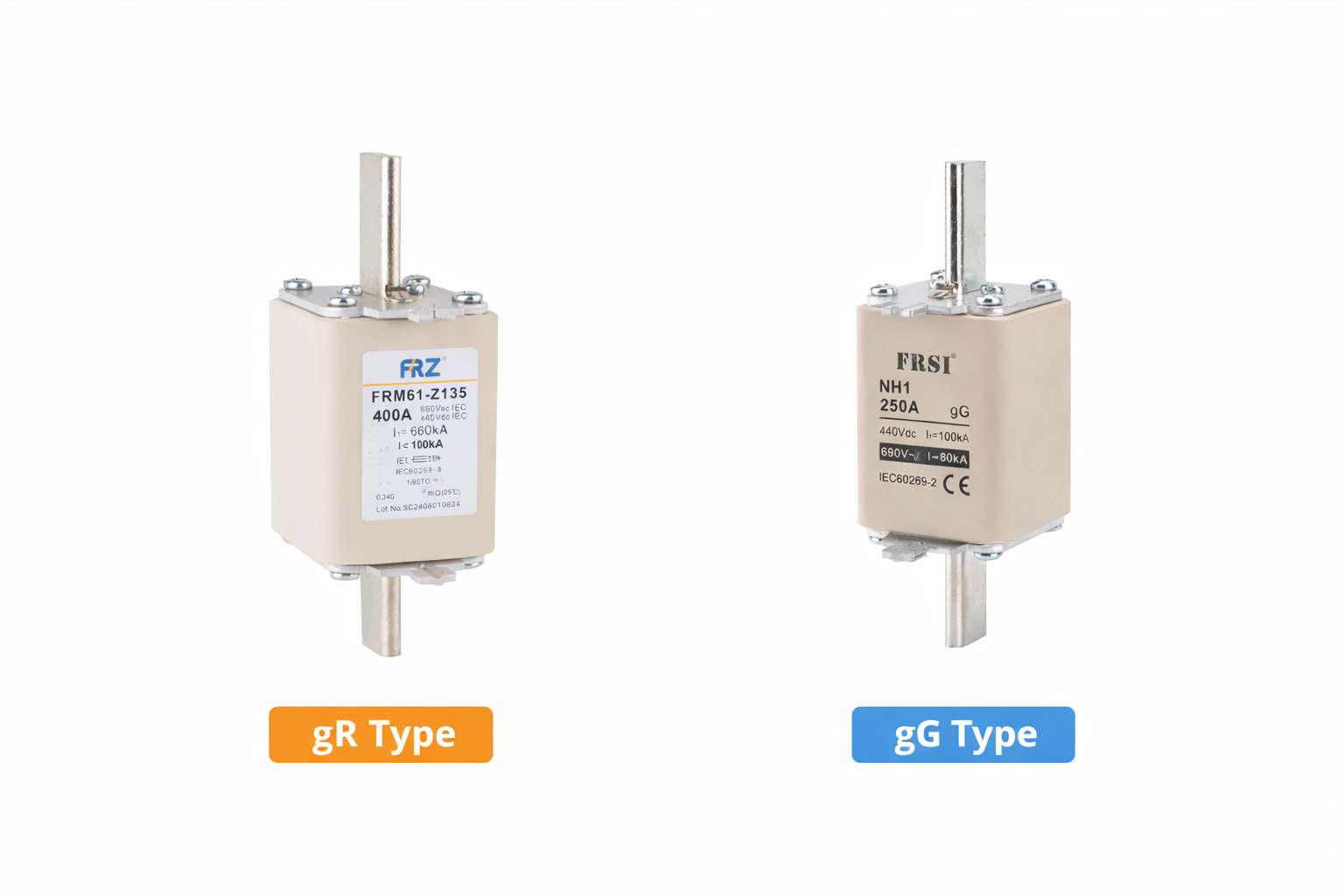
Comparison between gR fuse and gG fuse (NH type)

gG vs aR Fuse: Key Differences and Application Guide Introduction

When selecting a fuse for electrical protection, gG and aR fuses are two commonly used utilization categories defined by IEC 60269.

Although both fuse types are widely applied in industrial systems, their protection range, operating behavior, and typical applications are fundamentally different.

Understanding the difference between gG vs aR fuse helps engineers and buyers select the correct fuse type to ensure system safety, equipment reliability, and compliance with international standards.

What Is a gG Fuse?

A gG fuse (general-purpose, full-range fuse) provides complete protection against:

  • Overloads
  • Short circuits

Key characteristics of gG fuses

  • Full-range protection from low overload currents to high short-circuit currents
  • Designed for continuous operation under normal load conditions
  • Widely used in low-voltage power distribution systems
  • Complies with IEC 60269, DIN, and BS 88 standards

Typical applications of gG fuses

  • Power distribution panels
  • Cable and line protection
  • General industrial equipment
  • Building electrical installations

gG fuses are the most commonly used fuse type for low-voltage distribution systems.

What Is an aR Fuse?

An aR fuse (partial-range fuse) is designed specifically for short-circuit protection of semiconductor devices.

Unlike gG fuses, aR fuses do not provide overload protection.

Key characteristics of aR fuses

  • Extremely fast response under short-circuit conditions
  • Protection limited to short-circuit currents only
  • Optimized for very low I²t values
  • Must be used together with a separate overload protection device

Typical applications of aR fuses

  • Inverters and converters
  • UPS systems
  • Variable speed drives (VSD / VFD)
  • Semiconductor devices such as IGBTs, thyristors, and diodes
gG vs aR Fuse: Main Differences
Feature gG Fuse aR Fuse
Protection range Overload short circuit Short circuit only
Overload protection Yes No
Short-circuit response speed Fast Very fast
Typical application Power distribution & cables Semiconductor protection
I²t limitation Higher Very low
Additional protection required No Yes
How to Choose Between gG and aR Fuses

Choose a gG fuse if

  • The application requires general-purpose protection
  • Cables or electrical equipment need overload protection
  • The system is a power distribution or industrial installation
  • Simplicity and standard compliance are important

Choose an aR fuse if

  • The load includes power semiconductor devices
  • Extremely fast short-circuit protection is required
  • Overload protection is provided by another device
  • Low I²t values are critical for equipment safety
Common Misunderstanding: Can a gG Fuse Replace an aR Fuse?

No. A gG fuse cannot replace an aR fuse in semiconductor protection applications.

Although gG fuses provide full-range protection, their I²t values are generally too high to effectively protect sensitive semiconductor components during short-circuit events.

Conclusion
  • gG fuses are ideal for general electrical distribution and cable protection
  • aR fuses are essential for fast, low I²t semiconductor short-circuit protection
  • Selecting the correct fuse type ensures system safety, equipment longevity, and compliance with IEC standards

We value your privacy

We use cookies to enhance your browsing experience, serve personalized ads or content, and analyze our traffic. By clicking "Accept All", you consent to our use of cookies.

Consent Preferences

Consent Preferences